Aboriginal Headstones: Totems, Symbols & Memorial Design Ideas
Aboriginal Headstones, Totems & Symbols
Thoughtful memorial ideas inspired by native animals, plants, landscapes and the stories families want to preserve.
Some families ask us to include a kangaroo because it reminds them of someone who loved being out on Country. Others request an eagle, turtle, goanna or native wildflowers because those images hold special meaning. Some bring artwork created by a local Aboriginal artist, while others want a design that reflects where their loved one came from and the life they lived.
A headstone is far more than a piece of granite. It becomes a permanent place where family and friends can visit, remember, tell stories and honour someone for generations to come. When chosen thoughtfully and represented respectfully, animals, plants and Aboriginal-inspired artwork can help a memorial tell that story.
What are Aboriginal totems?
Many people have heard the word “totem” but are not quite sure what it means. For many Aboriginal Australians, a totem can describe a special relationship between a person, family, clan or community and an animal, bird, plant, landscape or ancestral being. That relationship may be connected with ancestry, identity, responsibilities and Country.
It is important to understand that Aboriginal Australia is extraordinarily diverse. Hundreds of Aboriginal nations and language groups have their own traditions, stories and cultural knowledge. The meaning of an animal in one community may be different in another, so there is no single universal list of Aboriginal totems and meanings.
The associations in the tables below are broad, commonly used interpretations offered only as memorial-design inspiration. They should not be presented as the cultural meaning of a particular Aboriginal nation, family or person.
Respecting culture when designing a memorial
One thing we’ve learned is that cultural artwork should never be treated as decoration. Some symbols, Dreaming stories and designs belong to particular communities, families or artists and should not be copied without permission.
We do not recommend taking artwork from the internet or reproducing a cultural design simply because it looks suitable. If a family has authorised artwork, or a design with particular meaning to their family or community, we can work with them to represent it as faithfully as the memorial material allows.
Where a family does not have a specific cultural design, another option is to create a personal memorial using native wildlife, local landscapes, rivers, ranges, gum trees and flowers connected with the person’s life. This can reflect a connection to Country without claiming that a general decorative image is a traditional cultural symbol.
Native animals and general memorial associations
| Native animal | Commonly associated with | Memorial design ideas |
|---|---|---|
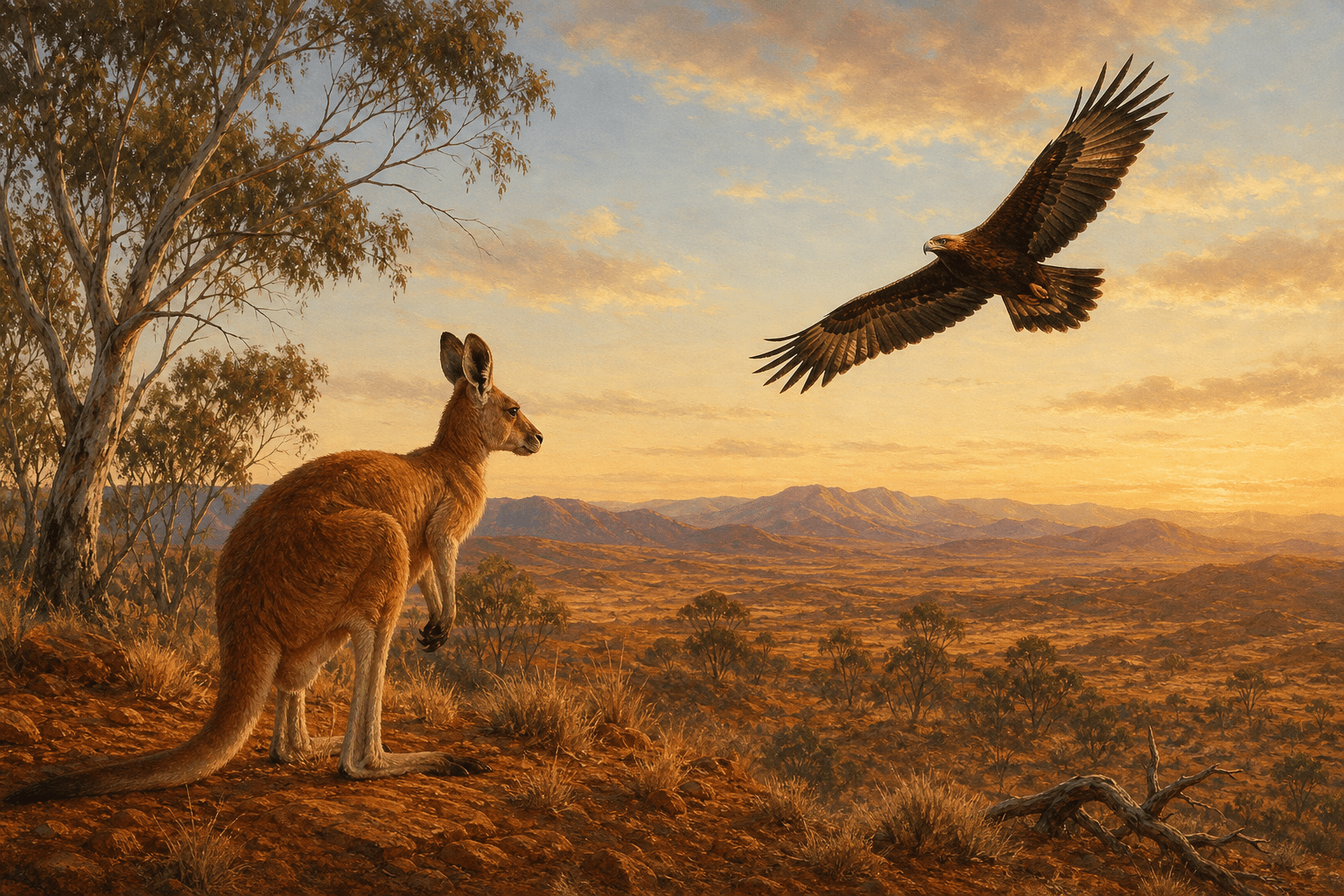
| Kangaroo | Strength, resilience, determination and moving forward | Bush landscapes, sunset scenes and family memorials |
| Emu | Family, guidance, wisdom and protection | Outback scenes and paired wildlife |
| Wedge-tailed eagle | Leadership, courage, protection and freedom | Flying above ranges or overlooking Country |
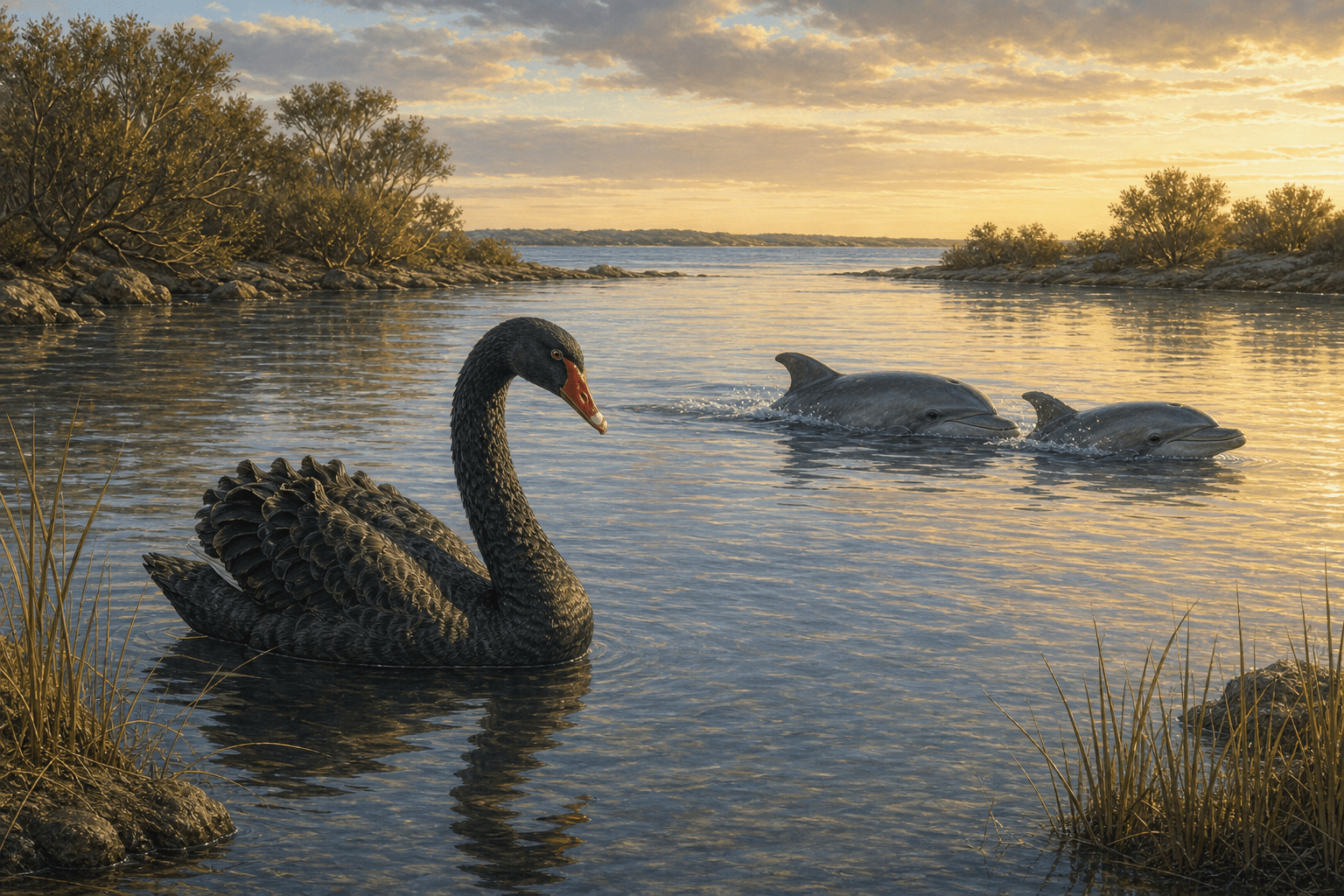
| Black swan | Grace, peace, belonging and Western Australia | Lakes, rivers and Western Australian scenes |
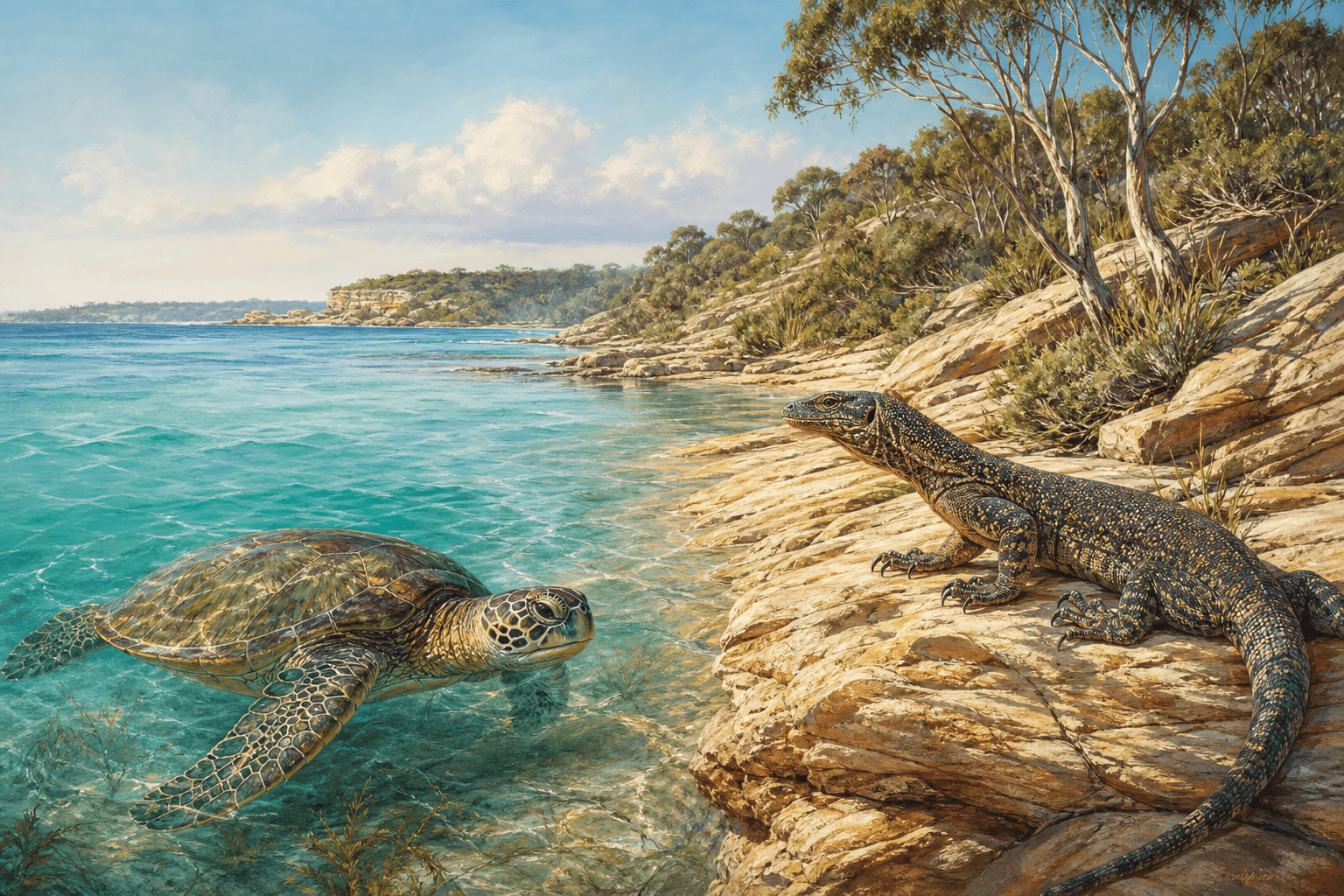
| Goanna | Survival, endurance and adaptability | Desert, rock and bush themes |
| Turtle | Long life, wisdom, protection and life’s journey | Coastal, river and family designs |
| Dolphin | Friendship, harmony and family | Ocean, beach and coastal scenes |
| Whale | Family, guidance, wisdom and strength | Coastal memorials and ocean landscapes |
| Koala | Peace, kindness and gentleness | Gum-tree and quiet bush scenes |
| Wombat | Home, stability and protection | Bushland and family memorials |
| Echidna | Determination, patience and resilience | Native bush settings |
| Dingo | Loyalty, guardianship and courage | Outback landscapes |
| Kookaburra | Joy, happiness and treasured memories | Gum trees and sunrise scenes |
| Pelican | Compassion, generosity and caring | River and estuary landscapes |
| Brolga | Love, harmony and lifelong partnership | Couples’ memorials and open landscapes |
| Cockatoo | Celebration, freedom and family | Bush and woodland settings |
| Magpie | Loyalty, intelligence and protection | Native gardens and morning scenes |
| Owl | Wisdom, intuition and guidance | Night sky or moonlit scenes |
| Possum | Family, home and adaptability | Forest and tree designs |
| Bilby | Hope and resilience | Desert memorial themes |
Native plants and general memorial associations
| Native plant | Commonly associated with | Memorial design ideas |
|---|---|---|
| Gum leaves | Connection to Country, healing and remembrance | Borders, wreaths and landscape backgrounds |
| Banksia | Endurance and resilience | Floral corners and borders |
| Golden wattle | Hope and renewal | Spring-themed memorials |
| Kangaroo paw | Individuality and pride | Decorative floral artwork |
| Waratah | Strength and courage | A feature flower engraving |
| Sturt’s desert pea | Love and remembrance | Outback memorials |
| Bottlebrush | Vitality and new beginnings | Bush landscapes |
| Grevillea | Friendship and kindness | Decorative floral designs |
| Native wildflowers | Beauty and lasting memories | Borders and background artwork |
| Boab tree | Connection to the Kimberley and heritage | Kimberley landscapes and silhouettes |
Popular Aboriginal-inspired memorial design ideas
The best design usually begins with the person rather than a catalogue. We ask families about the places they loved, the work they did, the animals they noticed, the stories people still tell and any artwork the family is authorised to use.
Ideas families may consider include:
- a kangaroo standing against a sunset;
- a wedge-tailed eagle flying over ranges;
- a family of turtles in a coastal or river scene;
- a goanna on natural rock;
- gum trees beside a river;
- a bush landscape with local wildlife;
- native flowers surrounding the inscription;
- a Kimberley landscape featuring a boab silhouette;
- dolphins or whales in a coastal scene; or
- animal tracks moving through the artwork.
These are starting points, not fixed templates. A memorial becomes meaningful when the family can explain why each element belongs there.
Premium Black Granite with Laser Etching
For a memorial featuring detailed animals, portraits or landscapes, we recommend premium polished black granite with laser etching. The deep black surface gives the etched artwork exceptional contrast, allowing fine features, shading and texture to become part of the memorial design.
Why black granite suits this artwork
- Fine detail: ideal for wildlife, family portraits and layered landscape scenes.
- Strong contrast: the pale etching stands out clearly against polished black stone.
- A premium appearance: the polished surface creates an elegant setting for both artwork and inscription.
Laser etching gives us far more freedom than simple outline artwork. We can combine a loved one’s portrait with a meaningful animal, native plants or a place connected to their life and Country.
Before production, we prepare a detailed design for the family to review. This makes it possible to refine the composition and ensure every element works together on the finished black granite headstone.
Every memorial has a story
One of the most important parts of our work is listening. A family may tell us their father loved fishing, so a river, turtle or coastal scene feels right. They may remember their grandmother spending her life in the bush among gum trees and kangaroos. Sometimes a particular animal has been important to the family for generations and the family already knows exactly how it should be represented.
Those conversations help us create something more personal than a name and dates alone. The finished design can hold a connection to family, place and memory in a way that words sometimes cannot.
Frequently asked questions
Can Aboriginal symbols be used on a headstone?
They can be used when the family has the right cultural authority or permission to use them. Artwork associated with a Dreaming story, nation, community, family or artist should never be copied without approval. If there is no authorised cultural artwork, native wildlife and landscapes meaningful to the person may provide a respectful alternative.
Does every native animal have one Aboriginal meaning?
No. Meanings vary between nations, language groups, communities and families. A general online list cannot replace local cultural knowledge.
Can we supply our own artwork?
Yes, provided the family has permission to reproduce it. We will also need to assess whether it can be adapted clearly for sandblasting, laser etching or bronze casting.
Can several animals, plants and landscape elements be combined?
Yes. A balanced composition can bring several parts of a person’s story together. We normally prepare a proof so the family can review the placement, scale and detail before production.
What if we know the story but not the final design?
That is completely normal. Tell us about the person, their family, Country, favourite places and the images that mattered to them. We can help translate those memories into a design for the family to consider.
Creating a lasting tribute
Choosing a memorial is not something most people do often, and there can be many decisions to make. Whether you already have authorised artwork, know the family’s totem, or simply want to include a favourite native animal, plant or landscape, we can work with you to create something personal.
If you would like to discuss an Aboriginal-inspired headstone, bronze plaque or memorial design, we will listen to your ideas, prepare a design for your family to review and help create a lasting tribute.
Leave a Reply
Want to join the discussion?Feel free to contribute!